
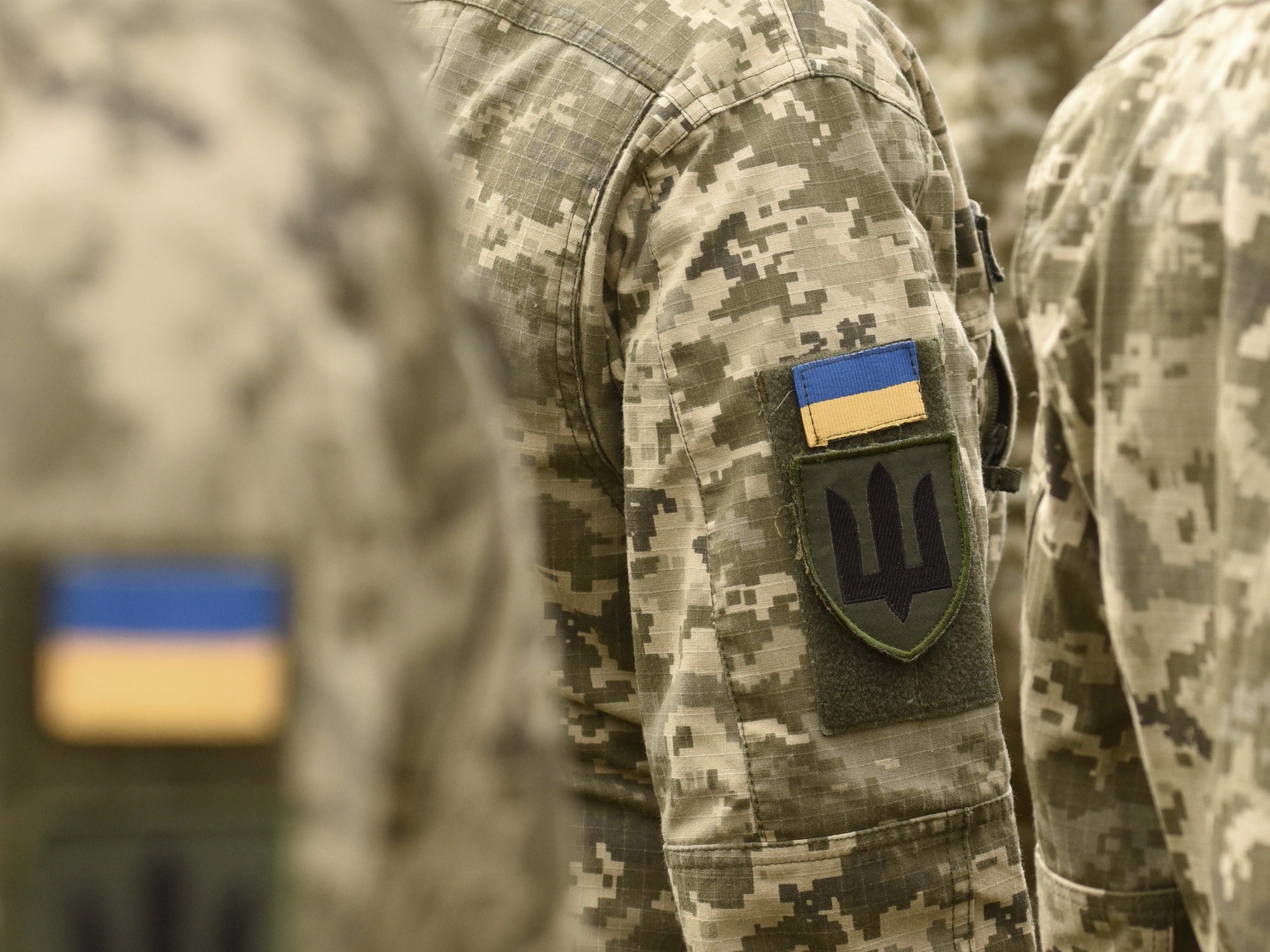
The death of a soldier has always occupied a complicated space between the personal and the political. Once a life is lost on the battlefield, it becomes absorbed into a larger narrative of service, sacrifice, and nation. Yet this process of collective remembrance often comes at the cost of the individual—of the life that existed before the uniform.
The narrative of the death of a soldier on a battlefield is rarely individualistic. Unless the soldier is an extremely famous figure, the public discourse tends to depict them as a number, another casualty of war, an interchangeable cog in a war machine. When soldiers die, the issues discussed publicly usually concern the implications for further battlefield developments. Even the language used to describe military casualties shies away from the realities of death and mutilation, hiding them behind the sanitized veil of the “manpower loss.”
In order for an army to be able to fight, a certain loss of individuality and the espousing of a new identity by its members is unavoidable. It is, however, understood, albeit by implication, that the soldiers who joined the war effort had once been someone else. They were individuals, not data points. And, whatever the developments on the battlefield, while they are alive they have an opportunity to reclaim their prewar identity or to find a new one, at least hypothetically. Once soldiers die, however, in the public discourse their identity is forever frozen in service to their state and nation.
Prior to the development of digital media, soldiers who lost their life on the battlefield could become one of two things: a hero-martyr or a data point. Military cemeteries typically embody this: the dead are no longer individuals, but servicepeople in uniform graves under uniform tombstones. Some attempts to humanize soldiers who die in action, however, tend to shy away from the fact that service and soldierhood formed a major part of their identity: the protagonists in Svetlana Aleksievich’s Zinky Boys are a stark example of this. She attempts to humanize them by giving them individual traits and describing the suffering that was inflicted upon them and their families by the experience of war in Afghanistan. While the author acknowledges that some of them had enthusiastically joined the occupying army, none is accountable or responsible for their actions. Everything that her protagonists or their relatives survived had happened to them. Very similarly, the 2022 Netflix movie All Quiet on the Western Front steps away from Erich-Maria Remarque’s book to depict soldiers as unwitting pawns in political games. Paradoxically, by trying to humanize soldiers and reveal the tragic loss of life such efforts slip into the same ubiquitous narrative of martyrdom and infantilize their protagonists.
Before the rise of social media, there was a clear distinction between public mourning and private grief when it came to soldiers. The first involved ceremonies, parades, uniforms, ranks, and flags. The second rarely left the shadows of a household and tended to be much more confusing and non-linear. The messy display of “inappropriate” emotion might have endangered the orderly public spectacle of mourning, and so it was to be avoided at all cost. To borrow from the philosopher and sociologist Maurice Halbwachs, remembering a soldier in a public space inevitably becomes an exercise in collective memory, something that we carry out as a group. He argues that individual memories and collective memory reinforce each other and feed on one another in a circular fashion. However, when the emotions and narratives in the individual element of this circle are strictly regimented and the ones deemed “inappropriate” are pushed away, and the hero-martyr template is reproduced. We cease to carry the memory of the individual in public in any meaningful way.
Until recently, in order for expressions of private grief to make it into the public sphere, the mourner had to be presented to the public by a collective anchor: someone in media or publishing with a position of power and a level of control over what emotions make it onto the screen or page and how they are framed. Even some extremely private accounts, like diaries and letters, needed an editor and a publisher to make it to the public eye. However, digital technology, and social media in particular, revolutionized things by empowering people to be in control of what they decide to share.
The role of digital technology in mourning and grieving rose to prominence during the COVID-19 pandemic. During lockdowns, digital media was the only way for many to say goodbye to loved ones who were dying overseas or in care facilities. The limitations imposed on public gatherings affected the traditional ways to grieve together during funerals, wakes, and similar social occurrences. The people who experienced loss turned to digitally broadcasted funerals to participate and to social media to find social support in their grief. While some aspects of pandemic grieving wilted after the introduction of vaccines and the termination of restrictions and funerary rituals returned to normal, the sharing of individual grief in social media became normalized.
When Russia’s full-scale invasion of Ukraine started in 2022, private wartime grief, which was rather strictly regimented and banished from public spaces during past military conflicts, had a new medium to be displayed through. Hundreds of thousands of people who had never considered a military career joined Ukraine’s forces and were forced by circumstances to reinvent their identity as soldiers and officers. The accounts of these former civilians often reveal their struggle in this process of reinvention. (For more on how this process unravels, I suggest Ordinary People Don’t Carry Machine Guns by Artem Chapeye and Absolute Zero by Artem Chekh, although the latter takes place during the earlier hostilities in Donetsk and Luhansk regions.)
When Ukrainian soldiers die on the battlefield, their newly found identity does not erase the one they had before, and the digital narratives of grief by their comrades, relatives, and friends show the person beyond the hero-martyr or data point dichotomy. The stories of loss do not only tell us about the person and describe their individuality; they also situate the deceased in their social circle in relation to others: as a spouse or a parent by trying to raise funds for their family or by describing their children, as a comrade through the promises of revenge, as a professional and a friend.
While the public discourse of remembrance inevitably takes time to develop, ritualize, and cement, the grassroots grief shared online carries an urgency that unsettles established frameworks. In the unfiltered posts of friends, partners, and comrades, the soldier is no longer only a symbol of sacrifice or victory but a person whose absence leaves a tangible void. These fragmented, personal accounts resist the state’s impulse to turn the dead into narrative instruments; they insist instead on relational memory—the kind that situates the fallen within everyday life. Yet this democratization of mourning also complicates collective memory: it multiplies voices, emotions, and truths that cannot easily be absorbed into one shared story. The digital mourning for Ukrainian soldiers thus represents a fragile reconciliation between the private and the public—a space where individuality reenters history, not in defiance of service, but alongside it.
Halyna Herasym is a PhD candidate in sociology at the University College Dublin. She was a Lesia Ukraïnka Junior Visiting Fellow at the IWM in 2025.


