
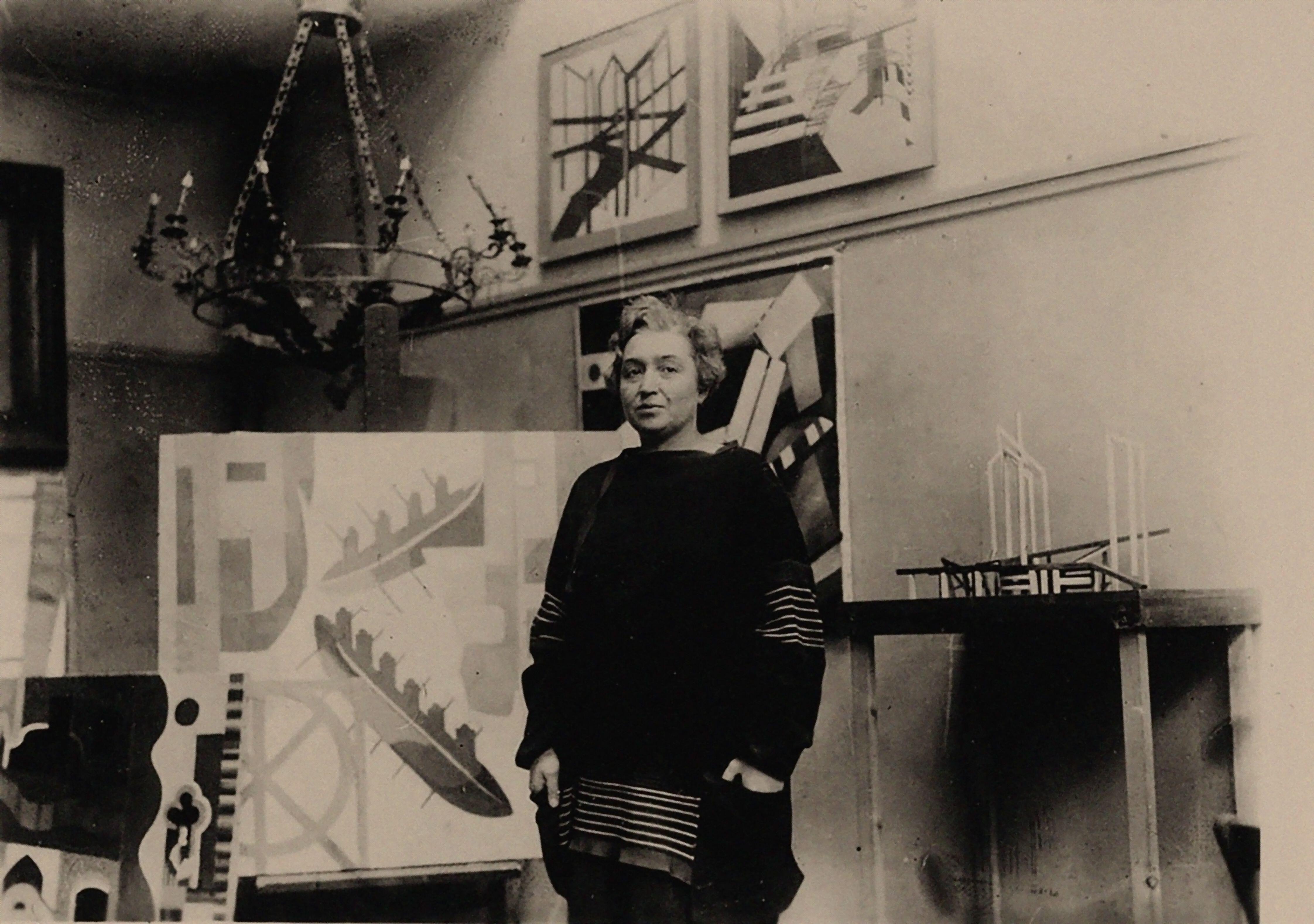
“In her home, as in herself, there was a striking fusion of European culture and the Ukrainian way of life. On the walls, among drawings by Pablo Picasso, Fernand Léger and Georges Braque, one could see pieces of Ukrainian embroidery, while a Ukrainian woven carpet covered the floor […].”
This recollection by actress Alisa Koonen epitomizes the approach to art and life of Alexandra Exter, an artist whose painting Purist Composition (1926) serves as the cover image for the IWM’s Ukraine and the World Research Program. The choice seems more than fitting. Exter, who came from a family of mixed heritage, was an active participant in transnational artistic networks, with her creative path crisscrossing the European continent. But the origins of her singular and idiosyncratic practice were rooted in Kyiv and Ukrainian decorative traditions.
Alexandra Exter (née Aleksandra Grigorovich) was born in 1882 to a Greek mother and a Belarusian-Jewish father in the Polish city of Białystok, then part of the Russian Empire. The family moved to Kyiv when Aleksandra, known to friends and relatives as Asya, was a child. She began her artistic training at the Kyiv Art College, where her classmates included the future modernist artists Alexander Archipenko and Oleksandr Bohomazov. Exter first visited Paris in 1906 and moved there semi-permanently the following year to take classes at the Académie Julian and Académie de la Grande Chaumière. While in the French capital, she befriended such pioneers of modernist art as Sonia and Robert Delaunay, Fernand Léger, and Ardengo Soffici.
During her sojourns in France, Exter remained connected to Kyiv, returning regularly and actively participating in the city’s cultural life. In 1908, together with David Burliuk, a fellow modernist artist from the Ukrainian lands of the Russian Empire, she organized the exhibition Zveno (The Link), which she used as a platform to publicly launch her artistic career. The show was one of the earliest displays of nascent radical art—not only in Kyiv, but also in the Russian Empire as a whole. Among the 32 works Exter presented were two cushions and a piece of embroidery. This was no coincidence, since Exter’s involvement with decorative practices and folk traditions preceded her encounter with revolutionary experiments in painting.
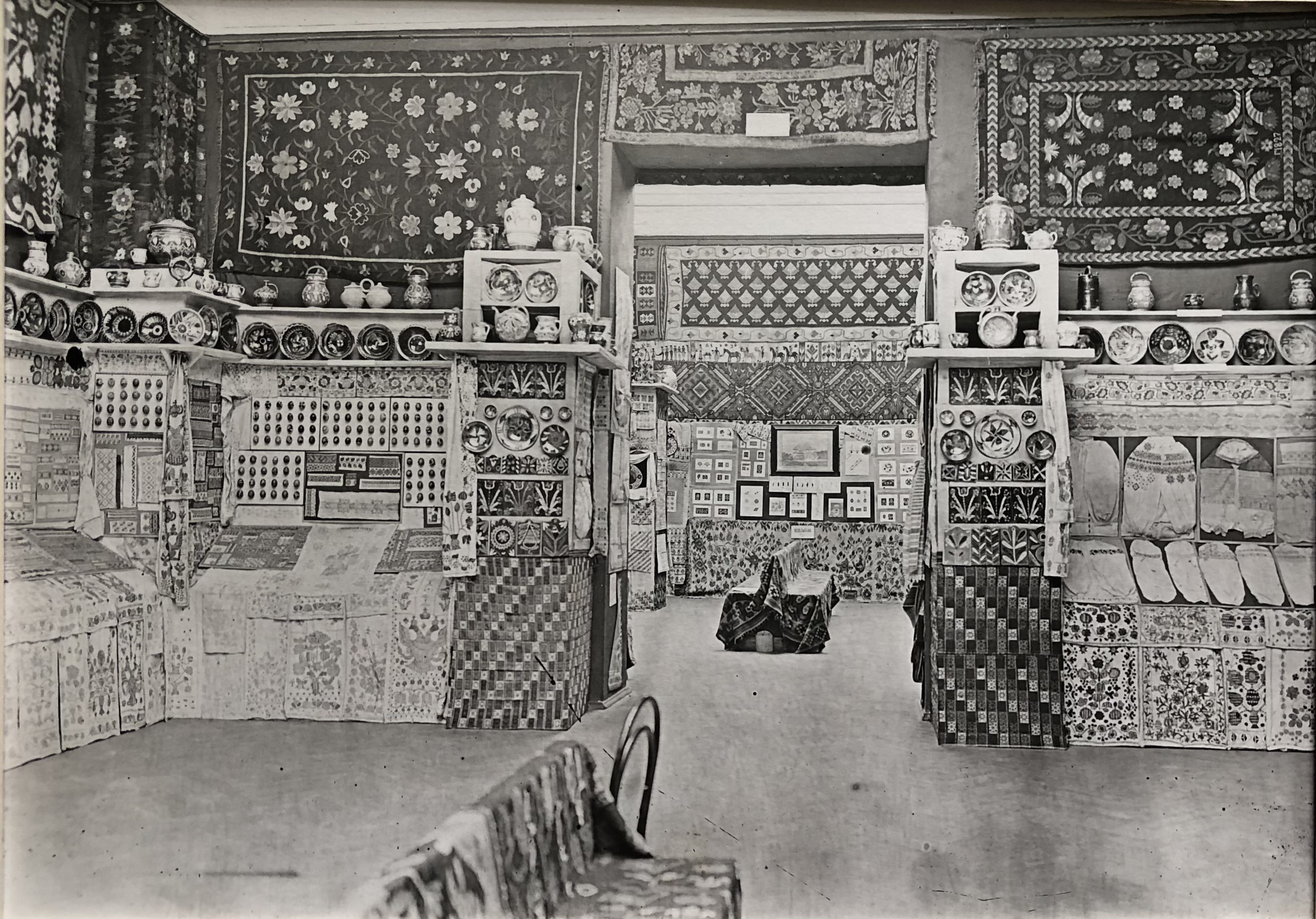
Folk art, a universally enduring practice, often forms the foundation of local and national identities. But by championing unmediated creativity outside academic traditions, it not only preserves heritage but can also reinvigorate artistic language. It was this potential that Exter wholeheartedly tapped into when developing her modernist aesthetic. A friendship with Natalia Davydova—a Ukrainian noblewoman, artist and patron of the arts, particularly peasant handicrafts—sparked Exter’s interest in Ukrainian folk art. In the early 1900s, Davydova organized a studio dedicated to collecting and recreating traditional models of Ukrainian embroidery at her country estate, Verbivka, in central Ukraine. Exter became involved with the workshop, undertaking research trips to find original samples for artisans to copy and eventually supplying her designs for textiles. Alongside Davydova, she also participated in staging the 1906 Exhibition of Applied Arts and Handicrafts at the Kyiv Museum of Industrial Arts and Science. Specifically, Exter selected samples of pottery and embroidery for the show and created the overall design for the displays, which featured approximately 5,000 objects.
For this presentation, Exter created an immersive environment: traditional carpets (kylymy) covered the walls from ceiling to floor; embroidered shirts (vyshyvanky) and runners (rushnyky) were displayed asymmetrically, showcasing zones with decorative patterns; and rows of hand-painted Easter eggs (pysanky) formed a frieze in the middle. Samples of pottery and ceramics complemented the arrangement. This staging emphasized two distinctive features of Ukrainian folk practices. First, a tendency towards geometrized patterns, often derived from floral motifs, with limited incorporation of realistic elements. Second, a proclivity for polychromatic solutions and the juxtaposing of contrasting colors: yellow and blue; white and black; red and green.
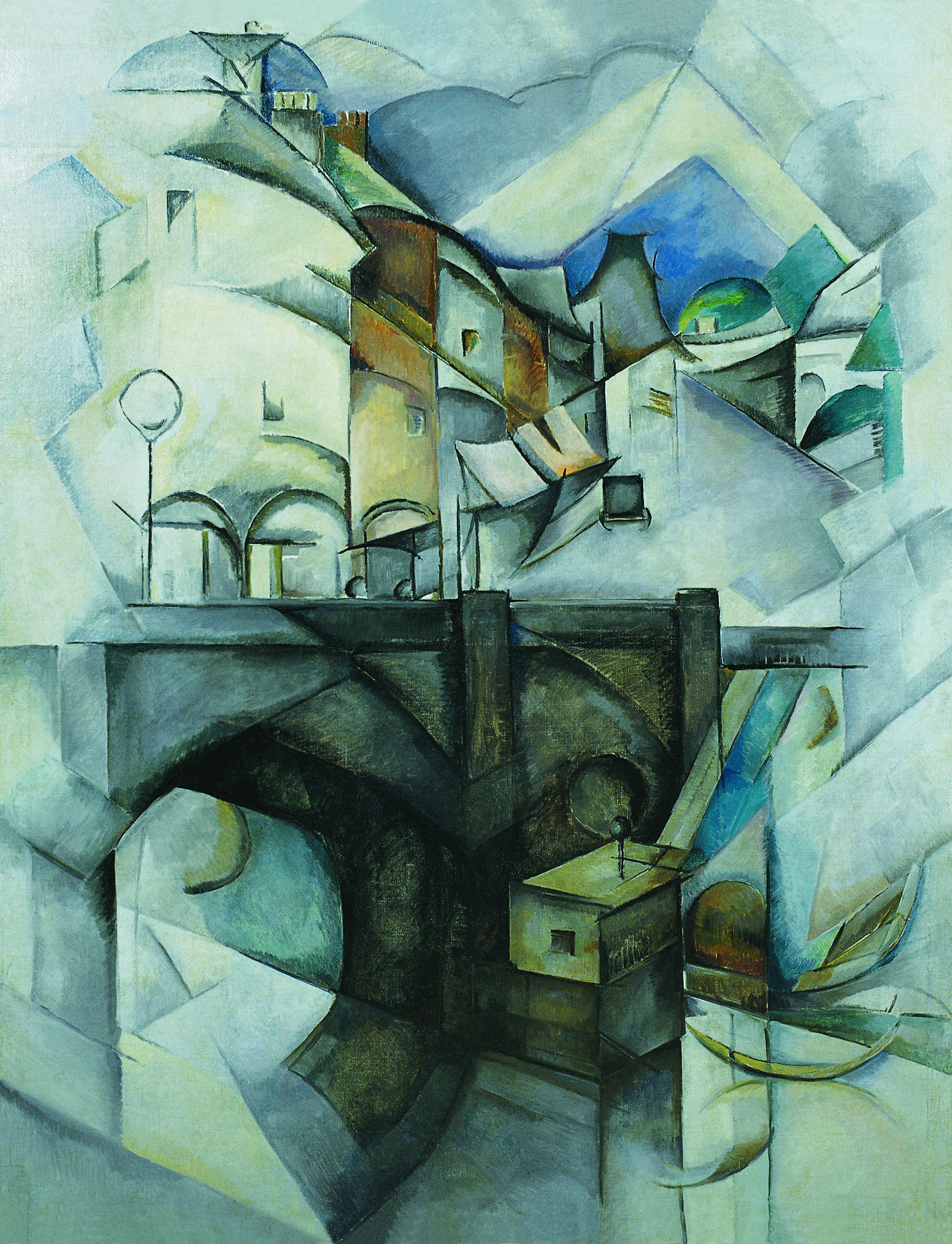
Throughout the 1910s, Exter incorporated these principles into her modernist painting, reworking them in the process. Her canvases from this period differ stylistically, but what unites them is a rhythmic application of bright, saturated colors that increasingly shifted her artistic language towards non-figurative, abstract art. This obsession with color, while not unique to Exter, was nonetheless noticed and commented on in Paris. The poet Benedikt Livshits, a friend of Exter’s from Kyiv, recalled that “more than once Léger chided Asya for the excessive brightness of her canvases.” Color, therefore, was a guiding principle of Exter’s art. It found an equal reflection in her living environment. Somewhat ironically, Livshits noted of the artist’s Kyiv apartment that the bright orange drawing room was “the only place in the whole house where the eye could rest from the Bacchanalia of colors.”
Exter similarly relied on compositional and chromatic principles derived from Ukrainian decorative practices in her teaching methodology. While introducing students to the latest art trends in her private studio in 1918 and 1919, first in Kyiv and later in Odesa, she had them study not only the work of Picasso, Matisse, and Cézanne, but also Ukrainian folk art. One of Exter’s students later remembered reproductions of Matisse paintings and drawings by Ukrainian peasants hanging side by side on the studio’s walls.
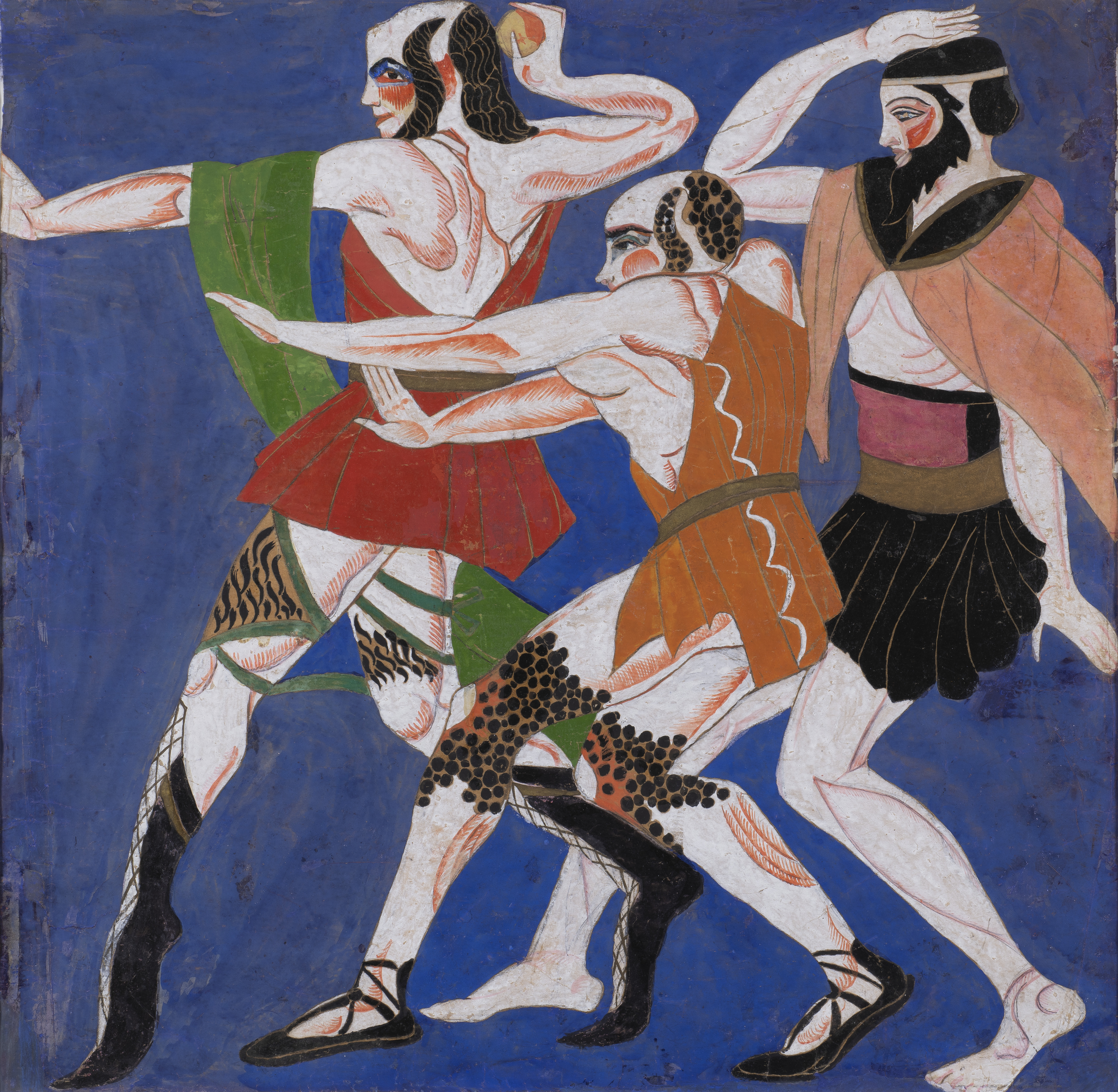
Another innovation of her teaching program was a course on stage design. Exter became acquainted with the theater world in 1916 when she collaborated with director Alexander Tairov on the drama Thamira Khytharedes (Tamira of the Cittern) at his Chamber Theater in Moscow. Translating Cubist and Futurist principles into scenography, Exter created rhythmic and volumetric constructions on stage that allowed actors to use their bodies fully when performing. The preserved sketches give an impression of color masses bursting into space. Exter taught scenography as a distinct discipline, encouraging her students to seek harmony and wholeness for a unified impression in their sets and costumes. Among those attending the course were Vadym Meller, who had a prolific career as a theater artist in Soviet Ukraine, and Boris Aronson, who emigrated to the USA in the 1920s and became a leading scenic designer for Broadway and Yiddish theater.
After settling in Paris in 1924, Exter taught composition and stage design at Léger’s Académie Moderne. Her classes there, like those in Kyiv and Odesa before that, attracted a multicultural cohort of aspiring artists. They included Stasys Ušinskas from Lithuania, who subsequently revolutionized stage design in his own country; Lydia Cabrera and Amelia Peláez from Cuba, the former going on to become a prominent ethnographer and the latter a preeminent Latin American modernist artist; and Ester Šimerová-Martinčeková, a significant figure in Slovak modern art who maintained a friendship with her teacher until Exter’s death in 1949.
Šimerová-Martinčeková recorded that Exter always stressed the vital inspiration she drew from Ukrainian folk art, especially the faultless coloristic intuition of the Ukrainian artisans with whom she worked in Verbivka. Šimerová-Martinčeková was a regular visitor to Exter’s house in Fontenay-aux-Roses on the outskirts of Paris. Like Koonen, she left vivid recollections of the artist’s living arrangements, noting the numerous Ukrainian folk culture items on display in Exter’s home. She emphasized their importance for Exter, observing that “Ukrainian ceramics, textiles, and icons were a part of her life; she needed to see these items all the time, to live with them daily.”
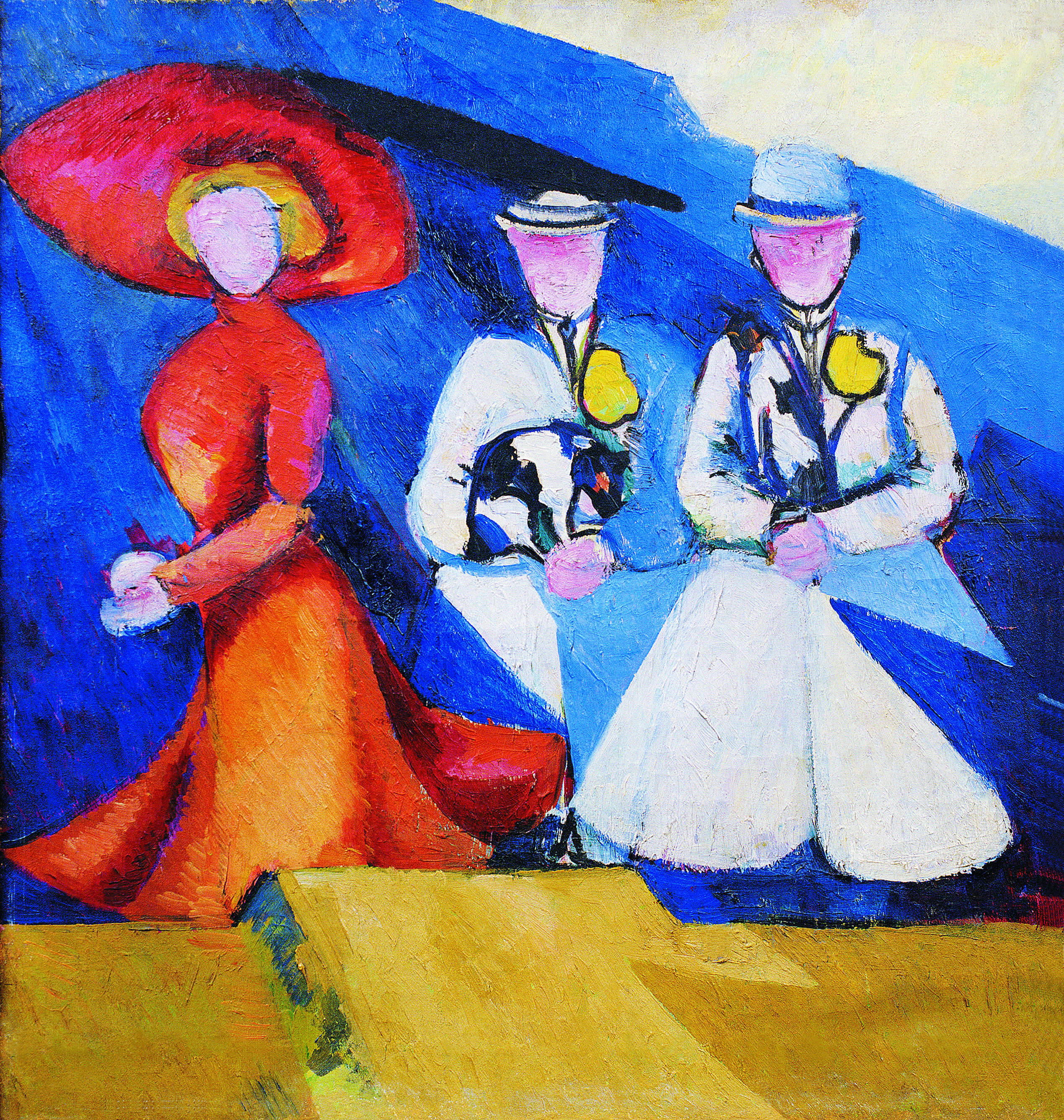
A trailblazing artist, thoughtful colleague, and generous teacher, Alexandra Exter filled her life with stimulating encounters and multicultural dialogues. She grew up in imperial Kyiv and matured as an artist while crisscrossing and negotiating the divide between East and West. While she embraced new trends and explored all the major progressive art movements, Exter nonetheless remained true to her own recognizable style and artistic system. This system was based on synthesizing Ukrainian creative traditions and radical experimentation to create art full of dynamic compositional rhythm and abundant color. Exter’s artistic method became her message to the world, disseminated not only through her own work but also that of her countless collaborators and students.
 Katia Denysova is a curator and art historian of modernist art. Between 2022 and 2026, she was the co-curator of the travelling exhibition In the Eye of the Storm: Modernism in Ukraine (winner of the 2023 Apollo Exhibition of the Year Award). Denysova also co-edited and contributed to the accompanying catalogue (London/New York: Thames & Hudson, 2022). As part of a postdoctoral fellowship at Eberhard Karls Universität Tübingen in Germany, she currently co-leads a research project on abstraction in East Central Europe, supported by the Getty’s Connecting Art Histories grant. From January to April 2026, Denysova is a Lesia Ukraїnka Visiting Fellow at the IWM.


